Many unknowns remain about the role artificial intelligence (AI) will ultimately play in our workplaces. With most organizations still in the pilot phase of AI adoption, [1] the majority of leaders [2] have reported that they are struggling to integrate this technology into their existing systems and are feeling the pressure to accelerate their efforts.
Some executives may think the solution lies in more technology, more agents and more testing. However, changes of this magnitude can only be embraced when people are prioritized.
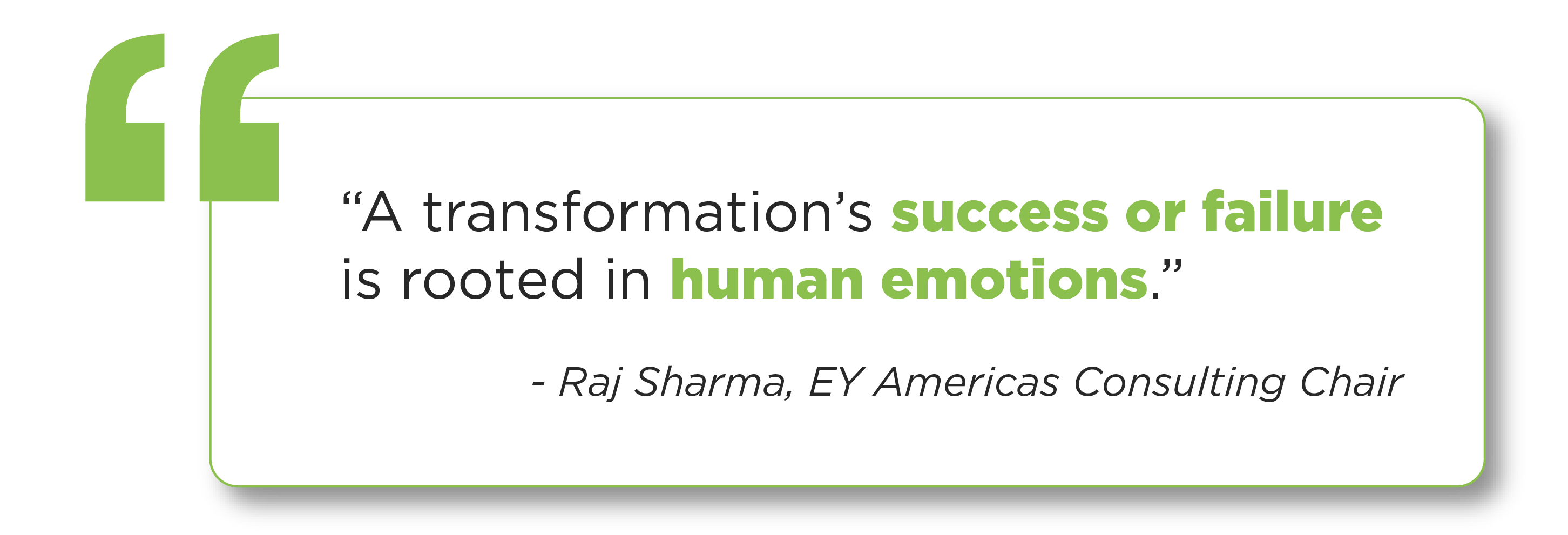
To gain buy-in from employees and encourage them to be conscious contributors to this transformation, it’s important that leaders acknowledge and support them.
Our CEO, Marie Unger, discussed three of the top concerns associated with AI in her recent YouTube video, including:
- Job displacement
- Ethics
- Lack of human touch
Leaders can create a positive trajectory for their businesses by proactively mitigating these risks with a people-centered approach. When staff understand how their companies intend to use AI, why certain tools are being adopted and where humans will remain essential, the fear of job loss and job erosion begins to dissipate. Successful AI adoption will put people first, embed responsible practices and harness the potential of individuals and machines to produce high-quality work.
The Three Pillars for Effective AI Adoption
1. Prioritize Employee Well-being
71% of staff are anxious about AI. [3] In addition to job displacement, these concerns include:
- Declining salaries
- Missing out on promotions due to digital illiteracy
- Falling behind if they do not use AI at work
These worries feed the idea that technology will be prioritized over employees. To keep personnel engaged, organizations must demonstrate that their people will remain central to their long-term strategy. The data indicates that by 2030, 66% of tasks are still expected to require human skills or a human-technology combination, [4] so it’s essential that people remain at the heart of any AI adoption strategy.
To demonstrate their commitment to employee well-being, executives, in partnership with Learning & Development and Human Resources teams, can:
- Introduce practices to build psychological safety [5] during this time of change
- Offer use-case examples and role-specific training to boost the digital literacy and human-centric skills staff need to succeed in the future
- Communicate transparently about both the “how” and “why” behind AI adoption
- Regularly survey workers about their well-being and workloads to proactively manage burnout
- Emphasize and celebrate employee-centric wins and success stories
- Provide mental health resources and stress management training
2. Elevate Ethics
A survey conducted by Infosys revealed that only 2% of companies have responsible AI measures in place, [6] leaving the majority vulnerable to unintended bias, privacy concerns and unfair outcomes. It’s important that companies address ethical considerations [7], including:
- Digital amplification: The enhanced reach and influence of AI in digital content has significant potential to shape public perceptions
- Algorithmic bias: The systemic discrimination of AI decision-making based on prejudiced data
- Cybersecurity: The risks of phishing, malware and ransomware targeting sensitive data handled by AI systems
- Privacy: The collection, storage and usage of employee or client data
- Inclusiveness: The limited integration of diverse perspectives and unequal access to AI tools
To mitigate these concerns, leaders can:
- Establish transparent AI guidelines that define acceptable use
- Communicate data privacy and security protocols regularly
- Train staff to monitor outputs regularly for bias, fairness and accuracy
- Provide guidance to empower staff to balance human decision-making with AI
- Use inclusive design principles when building agents and encourage cross-functional oversight to uncover potential bias
- Ensure employees have equal access to AI tools
3. Promote Human-driven Efficiency
While workers may be 33% more productive in each hour that they use generative AI, [8] technology is not perfect, nor immune to mistakes. Additionally, the outputs often lack creativity and perspective. Some of the most common challenges my colleagues and I’ve come across include:
- Misalignments with an organization’s brand, target audience or business priorities
- AI hallucinations
- Repetitive, inauthentic or unoriginal writing styles
- Contextual misunderstanding or irrelevancy
- One-size-fits-all outputs
- Bias
You will likely have more to add to this list, especially as it pertains to your work and industry, which is why it is essential for employees to understand how to evaluate AI. To maximize the benefits of technology while preserving quality, businesses can:
- Leverage AI for routine, low-risk tasks and employees for higher-value work
- Provide technical skills development in AI literacy and evaluation
- Deliver checklists of “look for’s” to staff when reviewing AI outputs
- Ask teams to form their own AI best practices, including which tasks can benefit from AI
- Invest in soft skills development like Emergenetics [9] to strengthen workers’ human skills
- Boost creativity and holistic decision-making using cognitive diversity [10]
Frame Your AI Strategy
As you assess your adoption practices, I invite you to pause and reflect on the current state using the following prompts:
- Well-Being: Are we providing adequate transparency and support to employees? What feedback channels exist for staff to discuss our AI integration?
- Ethics: How are we monitoring AI to prevent unintended consequences? What protocols are in place to protect our data and ensure accuracy?
- Efficiency: Are we using AI to augment human abilities rather than to replace roles? How are quality or creativity being promoted alongside the pursuit of productivity?
Answering these questions will clarify areas for growth and uncover new opportunities, allowing your AI integration to align organizational goals and employee needs.
A Vision for Sustainable AI Integration
AI has the potential to transform so many aspects of our work and world; however, its impact depends on how people adopt and use it. Long-lasting success will come to those who balance people, productivity and a code of ethics. Creating a human-centric foundation will allow you to champion change in a way that drives growth across the organization without losing the human touch that is so vital to performance.
Explore our website [11] to discover how Emergenetics can support your company’s AI adoption or fill out the form below to speak with one of our team members today!
FAQs
1. What are the biggest concerns about AI adoption?
Employees are most concerned about job displacement or job erosion [12], ethical risks and loss of human touch.
2. How can organizations balance well-being,ethics and efficiency in their AI implementation strategy?
To balance well-being, ethics and efficiency in your AI adoption strategy, analyze your current plan by answering the questions listed in “Frame Your AI Strategy: Questions to Ask,” including:
- Are we providing adequate transparency and support to employees?
- How are we monitoring AI to prevent unintended consequences?
- Are we using AI to augment human abilities rather than replace roles?
3. How can employees feel valued in an AI-driven workplace?
Help employees feel valued by delivering training that supports their long-term career success, giving them an opportunity to provide feedback on the transition process and delivering transparent communication about how the company intends to use AI alongside its people practices.
4. How can organizations ensure AIactually improves efficiency?
It’s important for leaders to define what productivity [13] and efficiency mean. For example, is speed the only metric or are quality and creativity part of the equation? Determine what outcomes are expected of team members and then provide guidance on how best to achieve these goals. These recommendations could include using AI tools and integrating cognitive diversity into your processes.
5. What steps can leaders take to ensure ethical AI usage?
Leaders can begin by establishing guidelines for ethical use and creating best practices for reviewing AI outputs. It’s also helpful to deliver scenario-based training to help employees recognize how they can apply their own judgment and int